Owning a Tuscan Villa or Castle: What Changes When Your Home Is Heritage
Buying a historic villa or castle in Tuscany: the State's 60-day right to buy, Soprintendenza approvals, tax benefits and burdens, restoration budgets and running costs.
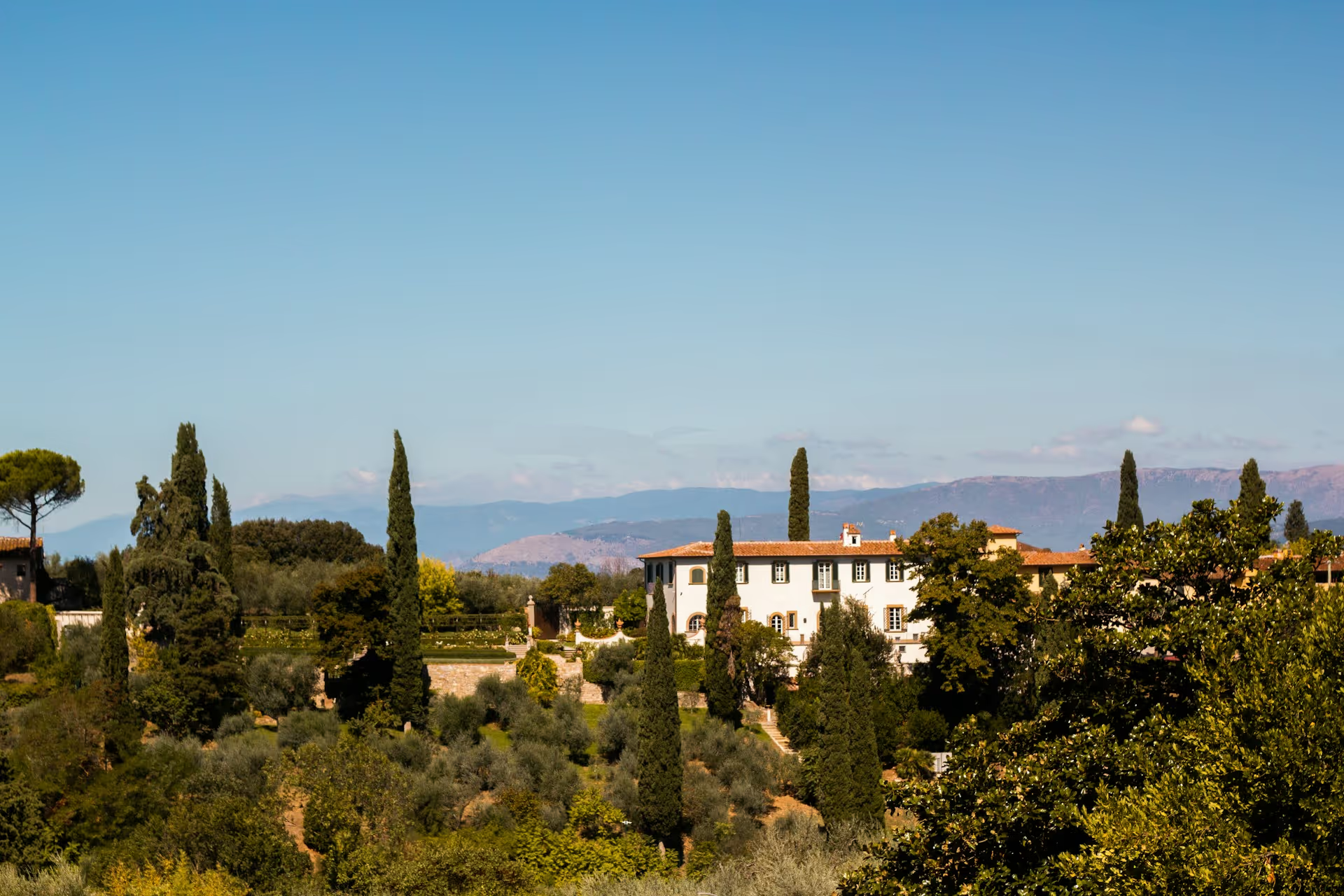
A Medici villa above Florence, a castle with a tower in the Chianti hills, a Renaissance palazzo in a Siena village. For many international buyers, a historic home in Tuscany is the ultimate expression of the Italian dream, and it is not an impossible one: historic properties come to market every year, sometimes at prices lower than a large flat in central Milan.
But a listed villa or castle is not just a large house. It is a piece of national heritage that you own, with obligations attached. This guide explains what changes when the home you want is historic, from the State’s right to buy it to the benefits that help pay for its upkeep. For the general rules of buying a farmhouse, see our guide to buying in the Tuscan countryside.
Why Tuscany Attracts Historic-Home Buyers
Tuscany combines the highest concentration of historic villas and castles with an established international community and an unmistakable landscape. According to LuxuryEstate data reported by La Nazione, around 20% of foreign searches for luxury property in Italy concern Tuscany, ahead of Lombardy and Lazio, with German buyers the most active. The most sought-after areas remain Chianti, the hills around Florence and Siena, the Val d’Orcia and, for coastal villas, the Versilia and Forte dei Marmi.
Is the Property Listed?
The first question is not the price but the legal status. Buildings of historic or artistic interest can be formally declared cultural property under the Cultural Heritage Code. The declaration is recorded and binds every owner. Many villas, castles, towers and religious buildings are listed; some are not, even if they are old. A listed status changes almost everything: who can buy, what you can change, and how the property is taxed.
The State’s Right to Buy
This is the rule that surprises most buyers. When a listed property is sold, the sale must be notified to the Ministry of Culture within 30 days. For 60 days from the notification, the State, or in some cases the region or the municipality, can buy the property at the price agreed between buyer and seller. The deed is signed subject to this condition, and the buyer does not take possession, and the seller cannot hand over the property, until the period has expired.
In practice the State rarely exercises its right on private homes, but the timing must be built into the transaction: deposits, financing, moving dates and furniture shipments all wait for the 60 days to run. The contract must be drafted accordingly, and the property checked by a lawyer specialised in heritage transactions before any proposal is signed.
Restoration: The Soprintendenza Decides
Any significant work on a listed building, from the roof to the windows, the plasterwork or the layout, needs prior approval from the Soprintendenza, the regional heritage authority. Approvals take time and often require specialist architects and restorers using traditional materials. Swimming pools, solar panels and extensions in the grounds can be difficult or impossible.
The consequence is financial. Restoring a listed villa typically costs far more per square metre than a standard renovation, and annual maintenance of roofs, frescoes, gardens and walls is a permanent budget line. Buyers who reason only on the purchase price are the ones who regret it.
The Tax Side: Burdens and Benefits
Italy partly compensates owners for these constraints. IMU, the municipal property tax, is calculated on half the cadastral value for listed buildings. Owners can also deduct from income tax 19% of the costs of maintenance, protection and restoration that are required by law or certified as necessary, and this deduction can be combined, within limits, with the general renovation deductions.
Other rules work in the opposite direction. Villas and castles are usually registered in the luxury cadastral categories A/8 and A/9, which remain subject to IMU even when they are the owner’s main home, and which do not benefit from the reduced first-home purchase tax. Understanding the taxes on the purchase and the annual running costs, including IMU, the municipal property tax, before making an offer is essential.
Making It Pay: Events, Hospitality and Rentals
Many historic properties support themselves by hosting weddings, retreats or paying guests. That can work, but it is a business, not a hobby. Weddings and events require permits, safety compliance and often a company to run them; turning a villa into a hotel or an agriturismo involves planning, tourism and agricultural rules; and short-term letting is increasingly regulated in Tuscany, with Florence having banned new short lets in its historic centre. Holding a historic property through a company can make sense for an active business, less so for a family home, and the structure affects succession planning across generations.
Before You Make an Offer
Working with someone who knows this market, and with lawyers and architects used to heritage properties, saves time and money at every step.
Our View
A Tuscan villa or castle can be the most rewarding home you will ever own, and some of the finest are surprisingly affordable to buy. They are rarely affordable to restore and run. Buy with the heritage rules, the restoration budget and the long-term ownership plan in front of you, not only the view.
Frequently Asked Questions
Can foreigners buy a castle or historic villa in Italy?
Yes. Foreigners can buy listed properties on the same terms as Italians, subject to the usual reciprocity rules for some non-EU nationals and to the State's right of pre-emption.
What is the State's right of pre-emption on listed buildings?
When a listed property is sold, the Ministry of Culture can buy it at the agreed price within 60 days of being notified. The sale is conditional until the period expires.
Do I need permission to renovate a listed villa?
Yes. Significant works require prior approval from the Soprintendenza, the regional heritage authority.
Are there tax benefits for owning a listed building in Italy?
Yes: IMU is calculated on half the cadastral value, and 19% of mandatory maintenance and restoration costs can be deducted from income tax.
Is IMU due on a villa used as my main home?
Usually yes. Villas and castles in cadastral categories A/8 and A/9 remain subject to IMU even as a main home, though listed status halves the taxable value.
Can I rent out a Tuscan villa for events or holidays?
Yes, but events and hospitality need permits and often a company, and short-term letting rules are tightening in parts of Tuscany.

Avv. Marco Mesina
Founder, Move to Dolce Vita · Avvocato, Milan Bar (Ordine degli Avvocati di Milano)
Marco is an Italian tax lawyer who advises individuals and families relocating to Italy on tax regimes, residency, citizenship, real estate and succession planning. Before founding Move to Dolce Vita he worked at Watson Farley & Williams, Withers and Deloitte in Milan.
- Milan Bar
- Citywealth Top 50 Italian Advisors 2025 & 2026
- Profiled by Forbes (2024)
- English · Italian · Spanish