


IMU, TARI and the annual obligations of owning property in Italy, explained for foreign and non-resident owners. We calculate, pay and regularise your property taxes, even without an Italian bank account.
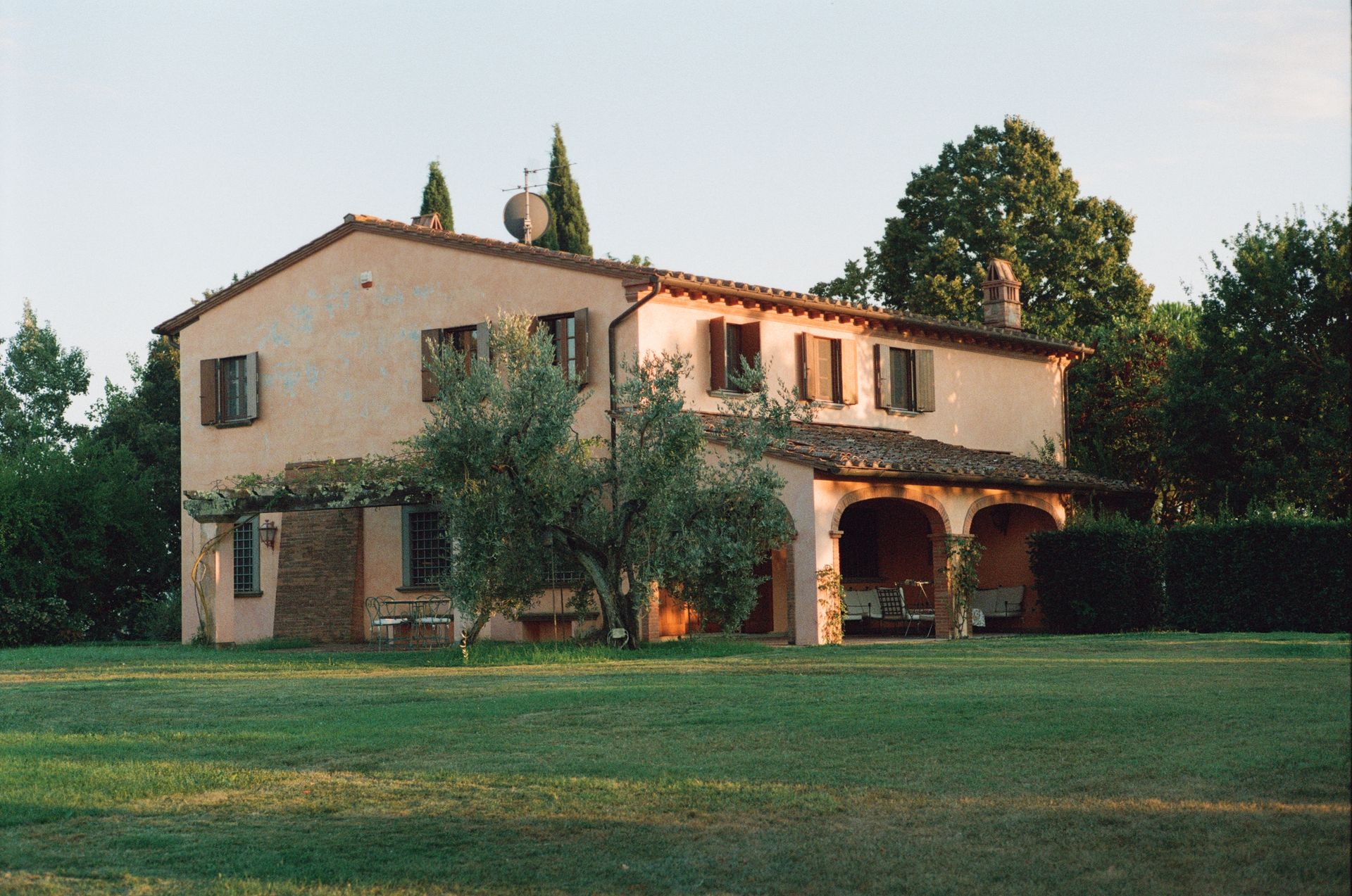
If you own property in Italy and do not live in it, you pay IMU. If you live in it as your registered main home, in most cases you pay nothing at all. Almost everything else about Italian property tax follows from that single distinction, and it is why two identical apartments on the same landing can produce annual bills of €1,400 and zero.
This page explains how IMU works for owners, including foreigners and non-residents: who is liable, how it is calculated, the rates, the deadlines, the reductions worth claiming and how to pay from abroad without an Italian bank account. It also covers two things most English-language guides get wrong: the reform for non-resident owners that is not yet law, and the parts of Italy where IMU does not apply at all.
IMU (imposta municipale propria) is the annual municipal tax on owning Italian real estate. It is governed by a single national law, but the rates are set by each of Italy's roughly 7,900 municipalities, which is why the answer to "how much is IMU?" is always "it depends where".
The tax is charged on legal title, not on who lives in the property or holds the keys.
Where several people hold the property together, each co-owner pays on their own share, and each share is assessed on its own facts: a brother living in the apartment as his main home pays nothing on his half, while his sister abroad pays on hers.
IMU is not charged on a main home (abitazione principale) and its appurtenances, such as a garage or a cellar, one per category. The exception is luxury property: categories A/1, A/8 and A/9 pay even as a main home, at a reduced rate and with a €200 deduction.
A main home is where you are both registered with the Anagrafe and habitually live. This is where non-resident owners run into the wall: without Italian residence you cannot have an Italian main home, so your property is a second home by definition and IMU is due in full.
For anyone weighing a genuine relocation against keeping a holiday home, the annual saving belongs in the calculation alongside the visa and the income tax position. Timing follows a simple rule: a month counts for whoever met the conditions for more than half of it. Register your residence on 10 April and the main-home treatment applies for the whole of April.
IMU applies throughout Italy with three exceptions that few English-language guides mention. The autonomous province of Trento applies IMIS, Bolzano/South Tyrol applies IMI, and Friuli Venezia Giulia has applied its own tax, ILIA, since 2023. They resemble IMU, but a calculation, a reduction or a deadline taken from an IMU guide can be simply wrong for a chalet in the Dolomites or a house near Trieste.
IMU is never calculated on what you paid or what the property is worth today. It starts from the cadastral income (rendita catastale) on the property's land registry record, revalued by 5% and multiplied by a coefficient that depends on the cadastral category. The municipal rate is then applied to that taxable base: cadastral income × 1.05 × multiplier × rate.
An apartment in category A/2 with a cadastral income of €900, held as a second home in a municipality applying the maximum rate of 1.06%: the taxable base is €900 × 1.05 × 160 = €151,200, and IMU is about €1,603 a year, paid as €801 in June and €802 in December. In a municipality applying 0.86% the same apartment costs about €1,300. As a registered main home it costs nothing.
Building land is taxed on its market value at 1 January, and agricultural land on its dominical income increased by 25% and multiplied by 135. Broad exemptions apply to agricultural land in mountain areas and to land farmed by registered farmers, so the land around a country house often produces no IMU, while the house itself does.
National law sets a base rate for each type of property and a band within which each municipality can move it. For ordinary second homes the base rate is 0.86%, which a municipality can raise to 1.06% or reduce to zero. Most cities of any size sit at or near the top.
Since 2025, municipalities can only vary their rates within categories set by ministerial decree (from 2026, the decree of 6 November 2025), and must publish them on the national fiscal federalism portal by 28 October. That is good news for foreign owners: your municipality's current rates are in a single national database, searchable by town and year.
Every figure you need is public, and you can establish what you owe in about twenty minutes. Most owners never do, which is why so many either overpay for years or discover a liability when an assessment arrives.
IMU is self-assessed. No bill arrives, not by post, not by email, and certainly not to an address abroad. The first thing many owners hear from the municipality is a demand for unpaid tax, interest and penalties several years later.
No payment is due if the yearly total for your properties in a municipality is below €12, unless the municipality has set a different threshold.
IMU is normally paid on form F24, through Italian home banking, a bank or a post office. But where a person resident abroad genuinely cannot use F24, the Ministry has confirmed that payment may be made by international bank transfer to the municipality, quoting your Italian tax code, the year, the tax code for the property type and whether it is the advance or the balance. You will need an Italian codice fiscale in any case, or you can appoint a representative to calculate and pay for you: that is part of what we do.
Several reductions cut the bill substantially. They are not applied automatically in every municipality, and some require a declaration, a registered contract or supporting documents.
Italian property taxes for foreigners follow exactly the same rules as for Italians: no surcharge on foreign ownership and no separate regime. What differs is the outcome, because the main-home exemption depends on registered residence, so property tax in Italy for non-residents is almost always payable.
A 50% reduction applies to one residential property in Italy, not let or lent, owned by a person who is resident abroad and receives a pension accrued under an international social security convention with Italy. The waste tax on that property is reduced by two thirds.
The practical consequence for most foreign buyers is blunt: an American or British couple who never worked in Italy and buy a house in Le Marche do not qualify, however long they have owned it. The relief is aimed at returning emigrants, not at incoming buyers.
In December 2025 the Chamber of Deputies unanimously approved a bill that would replace this regime with relief for non-residents who lived in Italy for at least five years before moving abroad, on a single home in their last Italian municipality of residence, where it has fewer than 5,000 inhabitants: full exemption up to €200 of cadastral income, IMU reduced to 40% between €201 and €300 and to 67% between €301 and €500, with the waste tax halved.
At the time of writing the bill is still before the Senate and is not law. Until it is enacted, the existing pensioners' reduction is the only relief. A great deal of coverage reports the new regime as already in force, and owners have stopped paying on the strength of it.
Owning Italian property creates a deemed income for income tax purposes even if you never receive a euro from it. But where IMU is due on a property that is not let, IMU generally replaces income tax and its surtaxes on that income. An empty second home therefore attracts IMU and nothing else, and often there is no Italian income tax return to file at all.
Let the property, and the position changes. Rental income is taxable in Italy wherever you live, at progressive rates or under the flat cedolare secca, commonly 21% (10% for controlled rents), and a return becomes due. IMU remains payable on top and is not deductible for individuals. We cover rental income and the cedolare secca through our real estate tax assistance.
The waste tax, TARI, is due to the same municipality on any property capable of producing waste, including a house used two weeks a year, and is calculated on floor area and occupants under each municipality's tariff. Unlike IMU, TARI is billed, so the municipality needs a correct address abroad or a representative. For a typical second home, IMU and TARI are the two largest recurring items, and both disappear or shrink if the property becomes your registered main home.
Where ownership changes during the year, the tax is split by months, with a month counting for whoever held the property for more than half of it and the day of the deed counted to the buyer. Sell on 16 April and the buyer pays for April; sell on 20 April and the seller does.
Inherited property follows the same logic. The heirs are liable from the date of death, each for their own share, whether or not the estate has been divided or the land registry updated. Where an inherited property has gone unpaid for several years, the exposure sits with the heirs: one of the more common problems we are asked to unwind.
Italian real estate taxes fall into four moments, and buyers who look only at the annual bill usually miss the largest number. Each of these has its own page within our real estate services.
After years of handling this for foreign owners, the same handful of errors accounts for most of the loss. None of them is complicated to avoid.
Avv. Marco Mesina, a member of the Milan Bar (Ordine degli Avvocati di Milano) and formerly of Deloitte and Withers, advises foreign owners on the Italian side of property ownership: checking the cadastral position before you rely on it, confirming which reductions apply, calculating and paying IMU and TARI for owners without an Italian bank account, regularising unpaid years before the municipality moves, and, for clients considering a real move, setting the annual cost against what changes when the house becomes a main home. Property tax in Italy is not difficult. It is unforgiving of people who assume a bill will arrive.
No. IMU depends on the property and on whether it is your registered main home, not on nationality. Foreign owners pay more in practice only because they are usually non-resident, so the property counts as a second home.
Yes, every year, in two instalments. No bill is sent and the obligation to calculate and pay is yours. Municipalities can go back five years, with interest and penalties.
Where you genuinely cannot use form F24 from abroad, the Ministry has confirmed you may pay by international bank transfer to the municipality, quoting your Italian tax code, the year, the tax code and the instalment. You will need a codice fiscale in any case.
Not yet. A bill for non-residents owning a single home in a municipality under 5,000 inhabitants was approved by the Chamber in December 2025, but it must pass the Senate before it becomes law. Until then the only relief is the 50% reduction for holders of a convention pension.
Almost certainly not. The relief requires a pension built up by aggregating Italian and foreign contributions under a convention, paid by your country of residence.
For that property, yes, unless it is in categories A/1, A/8 or A/9. It applies from the month in which you meet the conditions for more than half the days. Other properties keep paying.
It depends on the cadastral income and the municipal rate. An apartment with a cadastral income of €900 costs about €1,603 a year at 1.06%, or €1,300 at 0.86%.
Deal with it before the municipality does. Voluntary correction lets you pay with interest and a reduced penalty, until a formal assessment is served. Heirs are liable from the date of death, each for their own share.

Avv. Marco Mesina
Founder, Move to Dolce Vita · Avvocato, Milan Bar (Ordine degli Avvocati di Milano)
Marco is an Italian tax lawyer who advises individuals and families relocating to Italy on tax regimes, residency, citizenship, real estate and succession planning. Before founding Move to Dolce Vita he worked at Watson Farley & Williams, Withers and Deloitte in Milan.