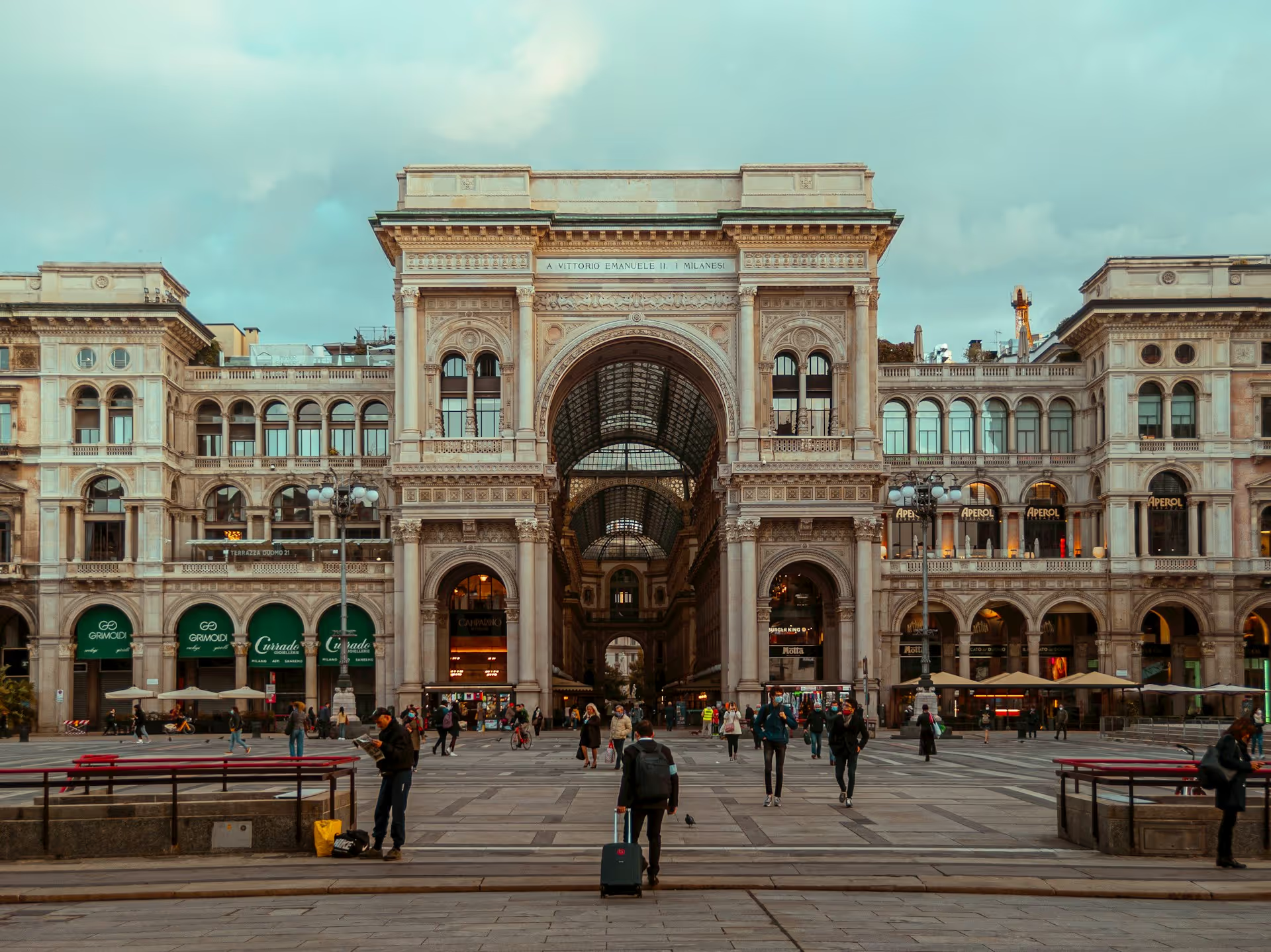
Where to Live in Milan: Neighbourhoods for International Families
Milan is Italy's most international and best-run city, and its most expensive. Neighbourhoods, prices, rents, air quality and the tax question, honestly assessed.
Milan does not seduce the way Rome or Florence do. It persuades. It works: the trains run, the airports connect, the schools are international, business happens in English, and a family can arrive in September and be functioning by October. That is why, over the past decade, it has become the Italian city of choice for internationally mobile families and entrepreneurs.
The short answer: Milan is the best place in Italy to live if you want a European capital that functions, and the worst if you came to Italy for light, sea and a slower pace. It is expensive, it is grey from November to February, and its air is among the worst in the country. Choosing the neighbourhood is the second question. The first is whether Milan is the right city at all.
Is Milan the Right City for You?
What It Costs to Live in Milan
According to idealista, the average asking price in Milan was about €5,200 per square metre in the first quarter of 2026, up around 4% on a year earlier, with the historic centre above €11,000. The prime end is another market altogether: Il Sole 24 Ore reports high-end homes at roughly €10,000 to €23,000 per square metre, with maximum asking prices close to €28,000 in 2025, up more than 50% since 2020.
Renting is the sensible first step for most newcomers, and not a cheap one. idealista’s October 2026 rental report puts the city average at about €22 per square metre per month, and €33 in the historic centre: a 120 m² family apartment in a central district easily exceeds €3,000 a month, before service charges.
The Neighbourhoods, Honestly
Milan's best addresses are close together, and the differences between them are about lifestyle more than status. These are the areas international families most often consider.
Two practical rules. First, map the school before the flat: Milan's international schools are spread out, and a cross-city school run in morning traffic will shape your days more than any view. Second, check whether your address falls inside Area C, the congestion-charge zone, and what that means for your car. We have written separately about the international schools and about whether buying in Milan still makes sense as an investment.
Air, August and Paperwork: Milan’s Downsides
The first is air. Milan sits in the Po Valley, where winter fog traps pollution. According to Legambiente’s Mal’Aria 2026 report, the city exceeded the daily PM10 limit on 66 days in 2025, against a legal maximum of 35. It is improving slowly, but it is a real factor for families with young children or anyone with respiratory issues.
The second is the calendar. Milan empties in August, when many shops and restaurants close, and its winters are short on light. Many residents structure the year around it: weekends on the lakes or in the mountains, summers by the sea. It is one of the best-connected cities in Italy, which makes that easy.
The third is bureaucracy, which Milan handles better than most Italian cities but which still applies. When you register as a resident, sort out a codice fiscale and choose a doctor, expect weeks, not days.
The Tax Question Comes Before the Address
Much of Milan's international appeal is fiscal. For wealthy newcomers, the flat tax for new residents replaces Italian tax on foreign income with a fixed annual charge, now 300,000 euro for those moving from 2026. For professionals relocating to work in Italy, the impatriati regime exempts part of their Italian employment or self-employment income. Both have conditions on prior residence abroad and both must be planned before the move.
That is also why Milan has become a magnet for internationally mobile families: not only the city, but the combination of city and regime.
Buying a Home in Milan
The Milan market moves fast in the central districts, and good flats rarely stay listed long. Two pieces of advice. Use someone who works only for you, not for the seller, to read the market and negotiate; and have the property checked before you sign anything, including the purchase proposal, which in Italy is binding once accepted. Older buildings in the centre often carry planning and cadastral irregularities that the notary does not check.
The Bottom Line
Milan is the Italian city that asks the fewest compromises of an international family, and charges for it. Choose it for schools, connections and a working life; pick the neighbourhood around the school and the commute; and plan the tax position before the move. Rent for a year before you buy: Milan rewards people who know exactly which street they want.
Frequently Asked Questions
What is the best area to live in Milan for expats?
It depends on how you live. Families often choose Magenta, CityLife or Porta Nuova for schools, space and modern buildings; couples and empty-nesters prefer Brera or Porta Venezia for character; younger buyers look at Navigli and Porta Romana.
How much does it cost to buy a home in Milan?
The city average was about 5,200 euro per square metre in early 2026, over 11,000 in the historic centre, with prime homes between roughly 10,000 and 25,000 euro or more.
How much is rent in Milan?
About 22 euro per square metre per month on average, and around 33 in the historic centre, according to idealista's October 2026 data.
Is Milan a good place to live with children?
For international families it is the strongest option in Italy, mainly because of the choice of international schools and the connections. The main drawback is winter air quality.

Avv. Marco Mesina
Founder, Move to Dolce Vita · Avvocato, Milan Bar (Ordine degli Avvocati di Milano)
Marco is an Italian tax lawyer who advises individuals and families relocating to Italy on tax regimes, residency, citizenship, real estate and succession planning. Before founding Move to Dolce Vita he worked at Watson Farley & Williams, Withers and Deloitte in Milan.
- Milan Bar
- Citywealth Top 50 Italian Advisors 2025 & 2026
- Profiled by Forbes (2024)
- English · Italian · Spanish