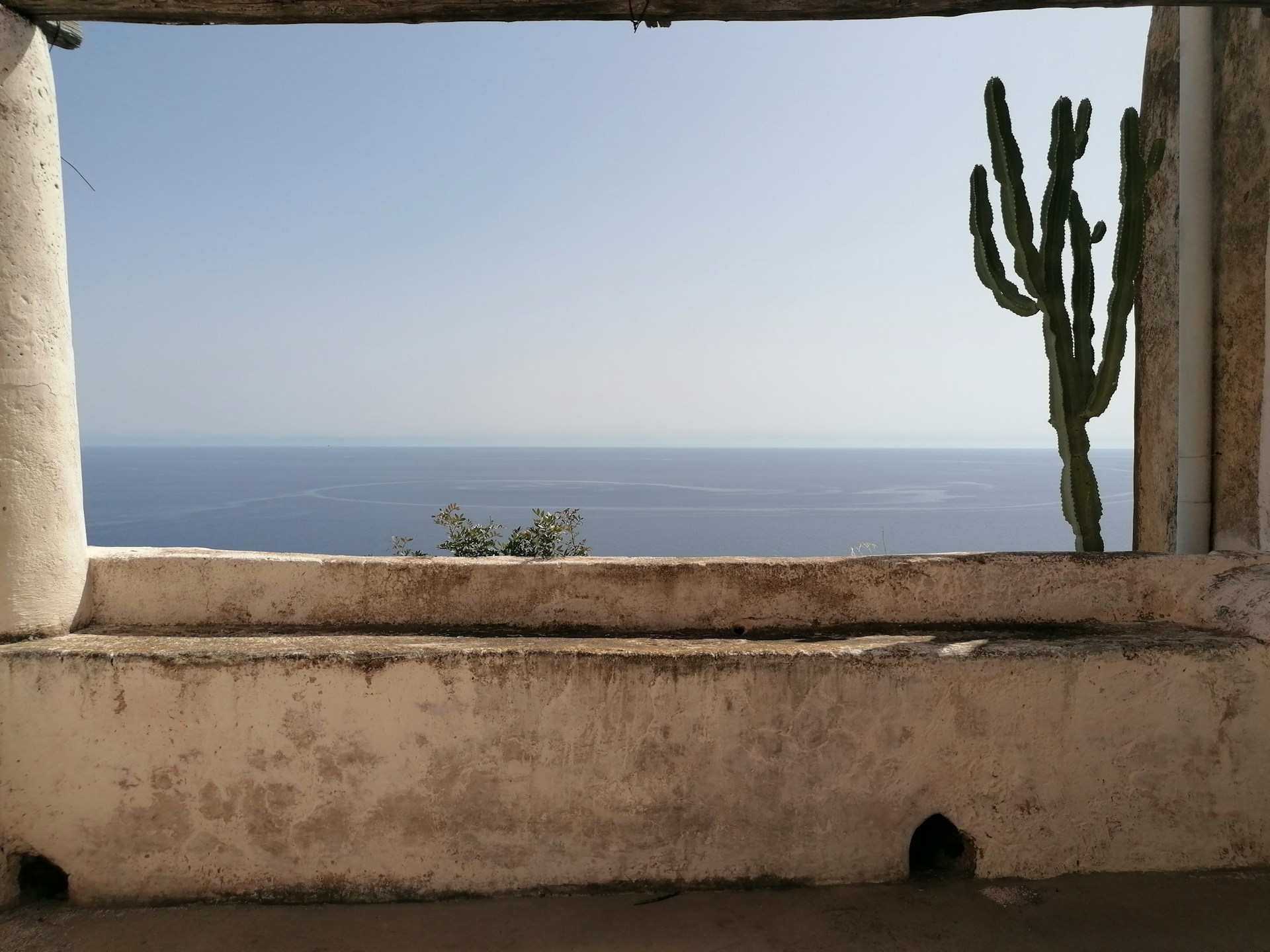
Living in Sardinia: Paradise in July, Another Island in February
Sardinia is superb from May to October and a different island in winter. Flights, healthcare, where to live, property prices and the 7% regime, honestly assessed.
Sardinia sells itself in July. The water, the light, the coast between Olbia and Santa Teresa, the food that still tastes of somewhere: none of it is exaggerated. The question for anyone thinking of living here rather than holidaying here is a different one, and it is answered in February.
Put simply, Sardinia is an excellent place to live for people who want quiet, space and a slower year, and who choose their town with winter in mind. It is a poor choice for people who need frequent travel, easy access to specialist healthcare, or an international community around them twelve months a year. This guide is about telling those two groups apart.
Is Sardinia Right for You?
Getting There and Away: The Winter Problem
This is the single most underestimated fact about living in Sardinia. Air connections are built around tourism, and when tourism ends, so do most of the flights.
According to L’Unione Sarda, between the summer peak and late November 2025 the island lost about 80% of its daily connections: Olbia went from up to 120 daily flights to 14, Alghero from 36 to 7, Cagliari from 109 to 33. For winter 2026, Il Sole 24 Ore reports that Ryanair is cutting Olbia capacity by half and Alghero by 15%, while adding services at Cagliari.
In practice, Cagliari is the only airport that stays reasonably connected all year. If you live in the north and need to reach northern Europe in January, expect indirect routes, connections through Rome or Milan, and fares that rise sharply around Christmas. Subsidised “territorial continuity” flights to Rome and Milan exist, but they are designed for residents' essential travel, not for an international commute.
Ferries run all year from Genoa, Livorno, Civitavecchia and Naples to Olbia, Porto Torres and Cagliari, and are the realistic way to move a car and belongings. They are slower and, in winter, less frequent.
Healthcare: Good Hospitals, Too Few Family Doctors
Sardinia has proper hospitals, concentrated in Cagliari, Sassari, Olbia and Nuoro. The weakness is primary care. As reported in May 2026, the region offered 496 vacant family doctor posts and filled only 41; the number of GPs on the island fell by about 40% between 2019 and 2025, against 14% nationally.
For a newcomer, that has a concrete meaning. Once you register as a resident you are entitled to a family doctor in the public system, but in many inland villages there may be none available, and the nearest may be a long drive away. Many residents combine the public system with private consultations, which are affordable by northern European standards. If you have a chronic condition, choose a town within easy reach of Cagliari or Sassari.
Where to Live: Five Very Different Sardinias
The island is large, and the coast and the interior are different worlds. Average asking prices tell part of the story: according to Idealista data reported by QuiFinanza, the regional average was around €1,700 per square metre in mid-2025, from about €2,500 in the province of Sassari, pushed up by Gallura and the Costa Smeralda, to under €1,000 in the province of Oristano.
A rule of thumb that rarely fails: the more a place is built around summer, the emptier its winter. Towns with a resident population, a school, a pharmacy and a bar that stays open in January are a safer choice than the most photographed bays.
The Island Is Getting Older and Emptier
This is not a footnote. ISTAT census data show Sardinia's population at about 1.56 million at the end of 2024, falling by around 8,000 a year, with a record low of 7,052 births. In villages under 1,000 inhabitants there are roughly four people over 65 for every child.
For a buyer, that cuts both ways. It is why inland houses are cheap and why municipalities court newcomers, including through the one-euro house schemes. It is also why some villages are losing their school, their bank branch and their bus service. Before buying in a very small place, find out which of those it still has, and whether it is likely to keep them. We have written separately about life in a very small Italian town.
The 7% Regime: Sardinia Qualifies
For foreign pensioners, Sardinia has a tax argument that most of northern and central Italy does not. Sardinia is one of the southern regions where the 7% flat tax for foreign pensioners applies, in any municipality with no more than 20,000 inhabitants. That covers the great majority of the island: the main exceptions are the larger towns such as Cagliari, Sassari, Olbia, Alghero, Nuoro and Oristano.
The regime replaces Italian income tax on all foreign income with a 7% substitute tax for up to ten years, and comes with its own conditions on prior residence abroad and on where your pension comes from. For non-EU citizens, the usual immigration route is an elective residence visa, which requires stable passive income and a home in Italy.
Buying a Home in Sardinia
Three points specific to the island. First, the coast is heavily protected: the regional landscape plan restricts building near the sea, which protects the views but also means that extensions, conversions and even some renovations need careful checking. Second, a large share of coastal property is used for a few months a year, so local rental demand outside summer is thin: do not buy on the assumption of year-round income. Third, older rural houses often have planning and cadastral irregularities that the notary does not check.
Before you commit, read about the checks that matter before you sign and the tax side of the purchase, including the reduced rate for a first home and when it applies to foreigners.
Should You Move to Sardinia?
Sardinia rewards people who come for the island as it is in winter, not only as it is in summer. Choose a town that lives all year, check flights and healthcare before falling for a view, and, if you are a foreign pensioner, look seriously at the 7% regime, which can make the arithmetic of a move here unusually favourable. Spend at least one winter month on the island before you buy. It is the cheapest due diligence there is.
Frequently Asked Questions
Is Sardinia a good place to retire?
For many people, yes: a mild coastal climate, low inland property prices and, for foreign pensioners, access to the 7% flat tax in most municipalities. The trade-offs are limited winter flights and a shortage of family doctors, so the choice of town matters more than the choice of island.
Is Sardinia empty in winter?
The coastal resorts largely are. Cagliari, Sassari, Alghero and inland towns with a resident population stay alive all year, but flights drop by around 80% between summer and late autumn.
Which Sardinian towns qualify for the 7% regime?
Any municipality with no more than 20,000 inhabitants, which is most of the island. The larger towns, such as Cagliari, Sassari, Olbia, Alghero, Nuoro and Oristano, are excluded. Check the population figure for the specific town before you move.
Is property in Sardinia cheap?
Inland and in the west, yes, often well under 1,000 euro per square metre. The north-east coast, including the Costa Smeralda, is among the most expensive places in Italy. The regional average in mid-2025 was around 1,700 euro per square metre.

Avv. Marco Mesina
Founder, Move to Dolce Vita · Avvocato, Milan Bar (Ordine degli Avvocati di Milano)
Marco is an Italian tax lawyer who advises individuals and families relocating to Italy on tax regimes, residency, citizenship, real estate and succession planning. Before founding Move to Dolce Vita he worked at Watson Farley & Williams, Withers and Deloitte in Milan.
- Milan Bar
- Citywealth Top 50 Italian Advisors 2025 & 2026
- Profiled by Forbes (2024)
- English · Italian · Spanish